From Vessel to Vault: Scaling Ceramic Craft into Architectural Systems
This design project reconsiders ceramics not only as domestic objects or surface finishes, but as a constructional and conceptual medium in architecture. Amid the rise of digital fabrication, this work repositions handcraft as a speculative design tool. Ceramic construction models are used to test spatial and structural logic, positioning making at the core of the design process.
Through iterative experiments with clay vessels and compressive stacking systems, the project examines how ceramics can scale from the intimacy of a pot to the enclosure of architectural space. It references historical techniques such as guna pipes in Telugu regions, Catalan vaulting, and Roman systems, where hollow ceramic forms shaped lightweight, expressive structures.
These precedents are reinterpreted through drawing, making, and modelling, forming a new architectural language grounded in ceramic logic. The tactile qualities of texture, weight, and slowness are treated as tools for thinking. An additional variety of media also works in tandem with the investigation, expanding the possibilities of ceramics in architecture and opening up new modes of spatial and material exploration.
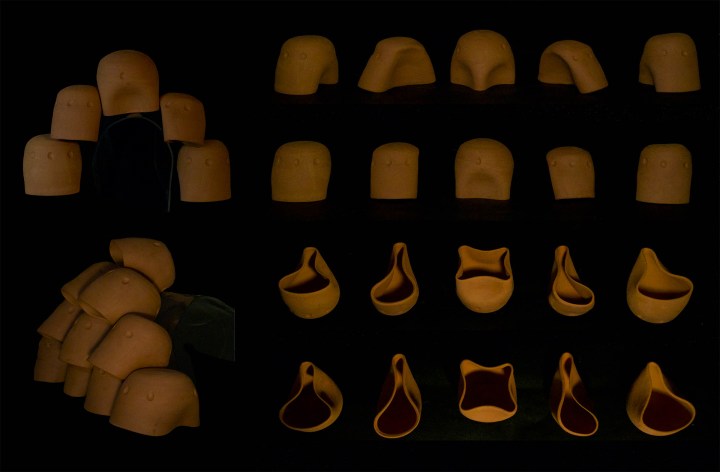
Modular Ceramic Blocks and Assembly System
Ceramic vessels are designed as modular units that stack and pivot, reflecting the fluidity of ceramic-making. Scaled up, they form a structural wall system with bespoke pieces that define curves and support self-bearing geometry.
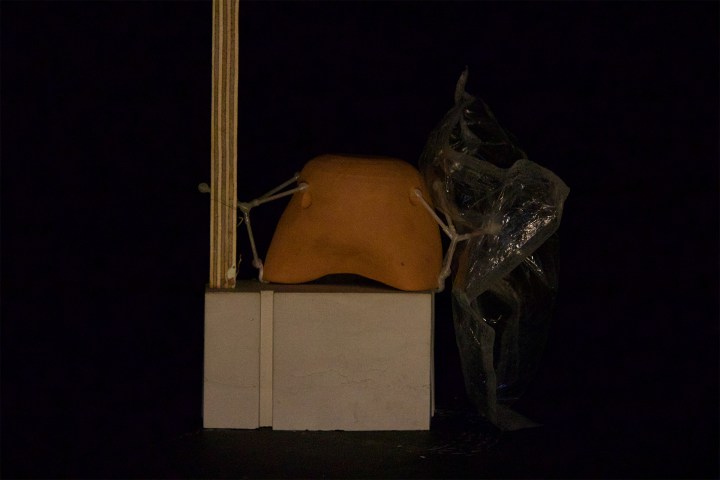
Detail of Ceramic Block Interface with Wall Layers
Integrating ceramic units into a larger architectural wall system.
Detachable anchors support insulation layers and CLT edge structures, ensuring overall stability and enabling modular adaptability.
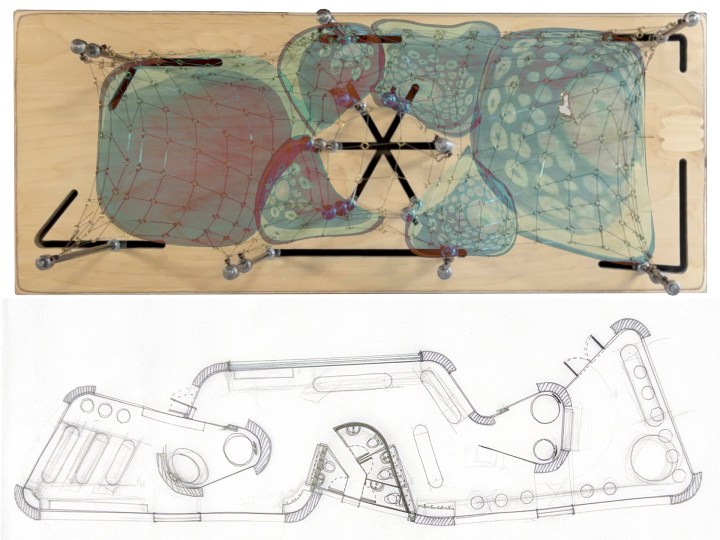
Programmatic Layout Superimposed with Glazed Ceramic Components
Superimposing glazed ceramic pieces onto the net structure to study spatial and programmatic relationships. This reveals the intensity and complexity of textures and activities across different zones of the space.
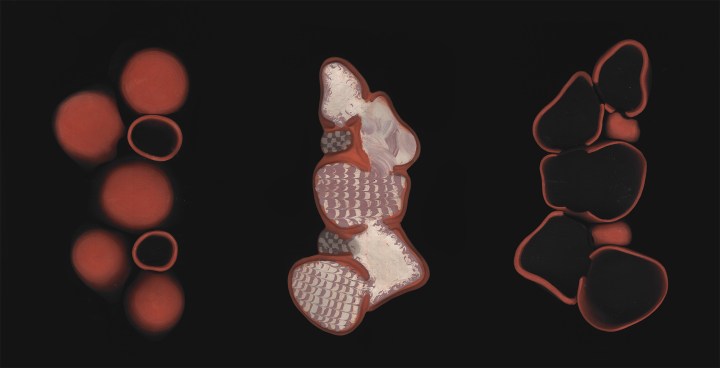
1:100 Scale Ceramic Building Model Scans
Scans of 1:100 ceramic models showing final programmatic vessels and floor tile plans. Used to explore volume, wall thresholds, and spatial relationships within the workshop, helping to refine design and material interactions.
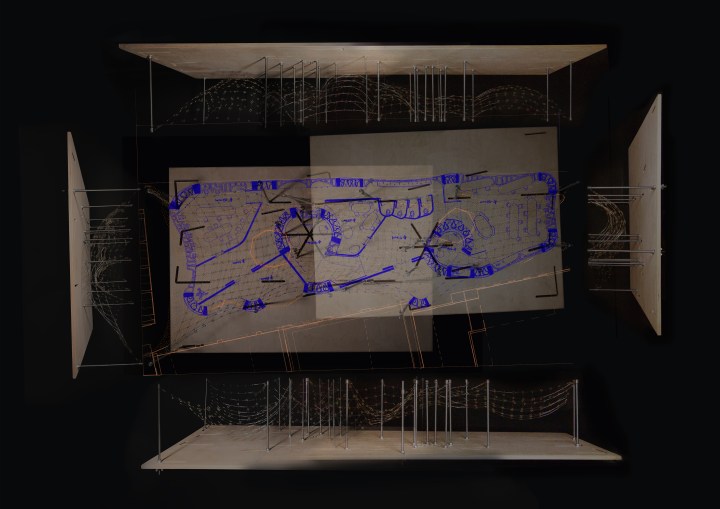
Superimposed Plans on Hanging Net Model
Superimposing net models onto the site context and digital structure to inform the final plan. This process aligns the building’s spatial program with its structural framework, illustrating how inhabitation corresponds directly with the structure.
 X-STUDIO