Nomadic Imprint
This project explores how routine, memory, and subconscious experience shape spatial perception. Beginning with personal rituals and dream fragments, the work develops a cyclical design methodology of sculpting, drawing, and mapping to investigate the soft thresholds between waking and dreaming states.
By tracing gestures made during sleep and translating dream residues into haptic forms, the project treats architecture as a tool for emotional recall—one that invites drifting, pausing, and subconscious engagement. The final outcome is a writer’s retreat sited in Wapping, where domestic rituals are subtly disrupted through spatial misalignments, rotating platforms, and environmental rhythms like tide and light.
Spaces bleed into one another—archive into studio, laundry into walkway—without fixed thresholds, allowing attention to shift gently.
The retreat becomes a living system that mirrors the rhythm of thought and memory, asking: what happens when we design not for clarity or control, but for hesitation, interruption, and the forgotten?

Dream Mapping – Routine, Disruption, and Mental Drift
This drawing traces how dreams and the everyday mundane intertwine. Anchored by routine yet shaped by moments of drift, it reveals how subconscious fragments emerge through subtle disturbances,blurring the line between memory and invention.
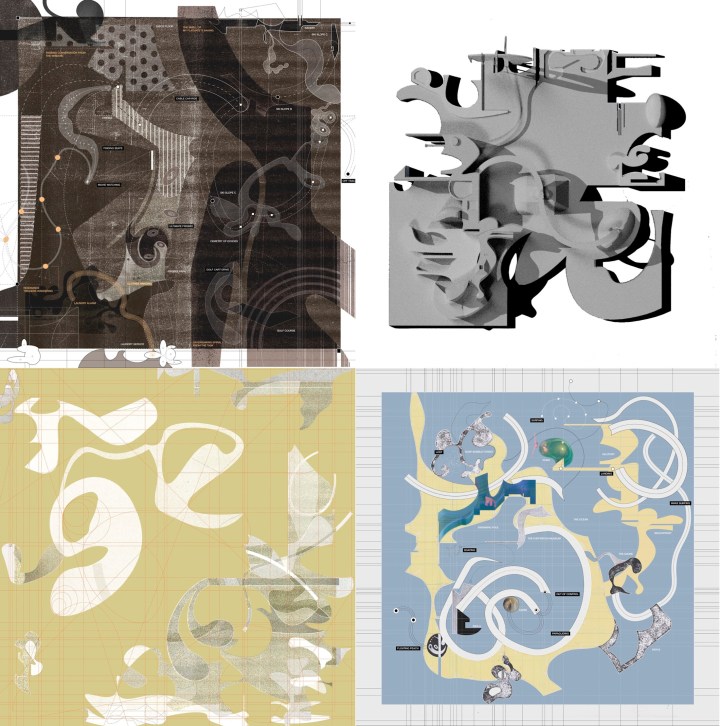
Haptic Fragments
These drawings capture a drifting consciousness—where the residue of dreams merges with daily life. Each form emerges through layered intuition, mapping the quiet negotiations between imagination, memory, and spatial rhythm.

Laundry Room Rotational Mechanism
This movable laundry room disrupts routine through gentle misalignment. Shifting along a circular rail, it delays expected access—turning a mundane task into a pause that invites awareness and recalibration.
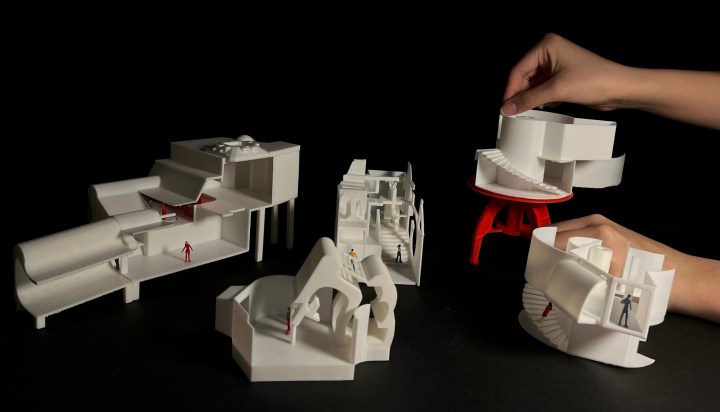
Fragment Models
Each model captures a spatial rhythm drawn from subconscious gesture, like twisting stairs, curved shells, or rotating forms. Activated by hand, these haptic prototypes test how dream fragments and bodily memory can inform spatial sequences, inviting tactile engagement and momentary disorientation.
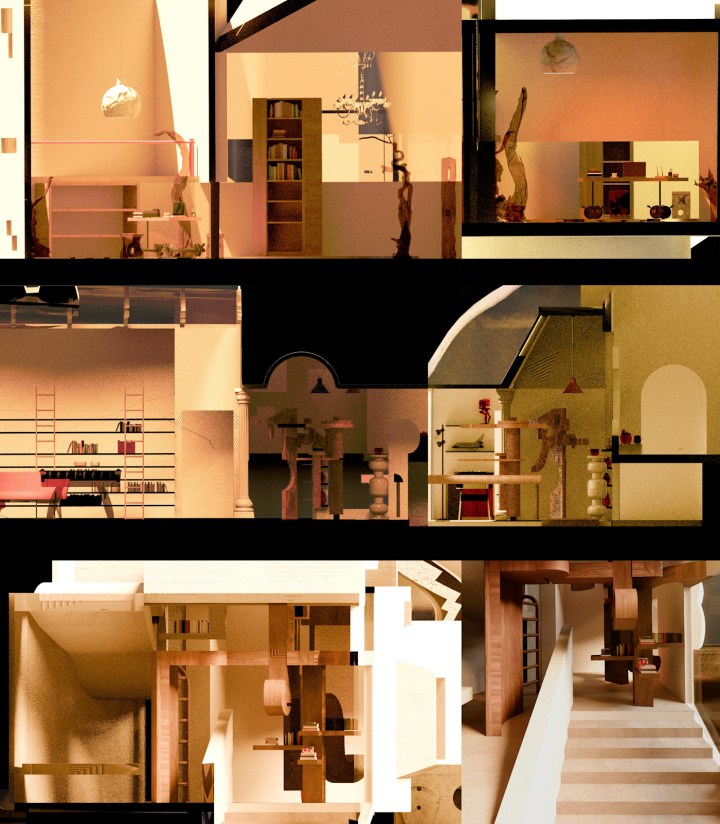
Writer’s Unit, Archive & Library
These render fragments reveal the atmospheric layering of the retreat’s key spaces: the archive, library, and writers’ units. Carved shelves grow from columns, ladders lean into voids, and writing nooks emerge in-between. Material rhythms and spatial misalignments invite pause and drift—encouraging writers to reorient themselves through subtle shifts in scale, light, and memory.
 X-STUDIO