A Jig for a Jig; Translating resonance through jig-making
This research project explored the conceptual and practical role of the jig in manufacturing and architecture, focusing on body contact and resonance. The study led to the creation of a custom musical instrument and a plan for a choreographed building. The project developed through the learning of different traditional woodworking skills and digital processes, combining traditional workmanship with new and emerging fabrication techniques, demonstrating the jig’s capacity to translate resonant activity and inform architecture.
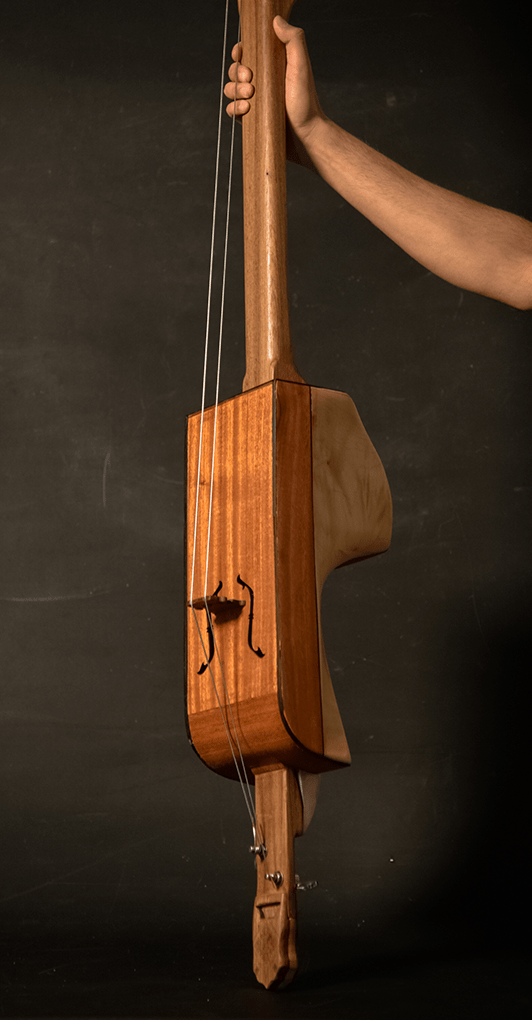
Concept instrument
The instrument consists of a hollow mahogany body, with a double-sided CNC maple face carved to the players contacting chest and shoulder. Bound with rosewood, the bracing and internal support is spruce and the and central through elm neck.
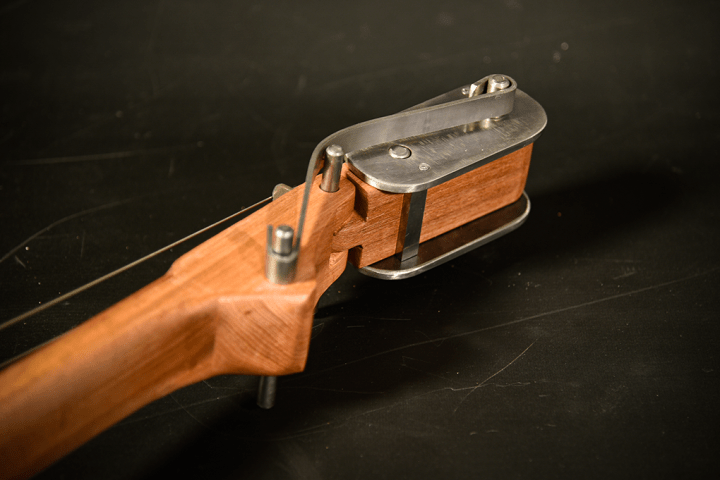
Timber and metal joinery
At the head of the instrument, an intertwining of metal and timber is engineered to allow for the pivoting of the head with a leaf spring and pins, altering the tension of the strings and thus the pitch of the note played based off the force applied.
Activation on site
Whilst playing the instrument on the site, a choreography began to emerge from the shifting postures the player adjusted to in order to achieve various notes. The response of the boat hull activated as a secondary resonance chamber.
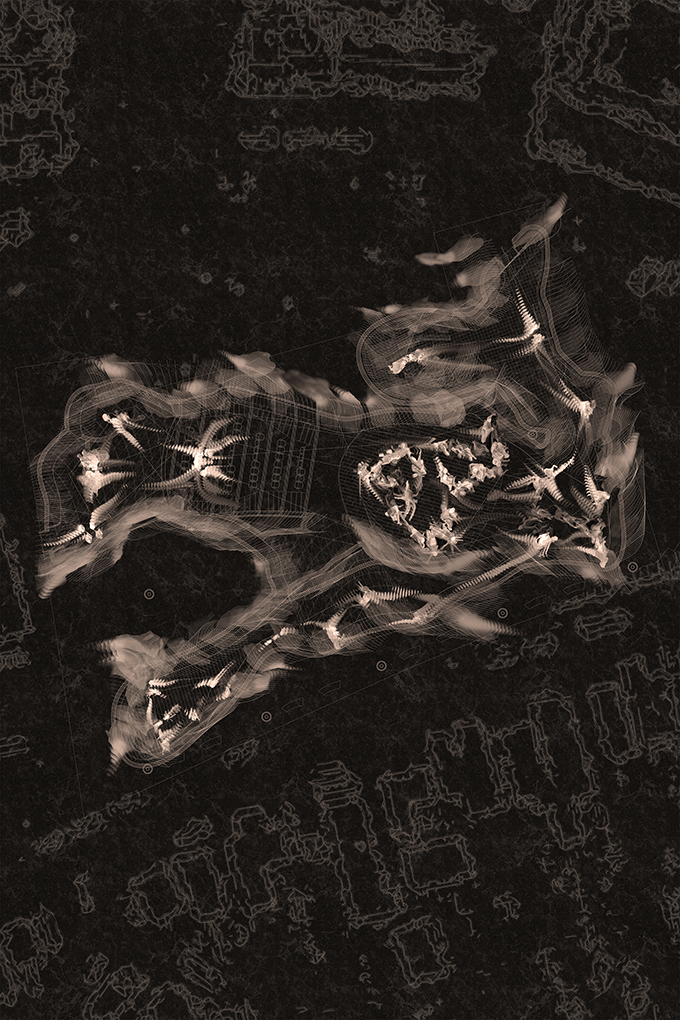
Performative translation
Through the study of motion capture methods of Étienne-Jules Marey, the plan for a choreographed building came to fruition. Acted in fragments, the spaces of the dance studio are choreographed at 1:1 and arranged using a further spatial jig at 1:20.
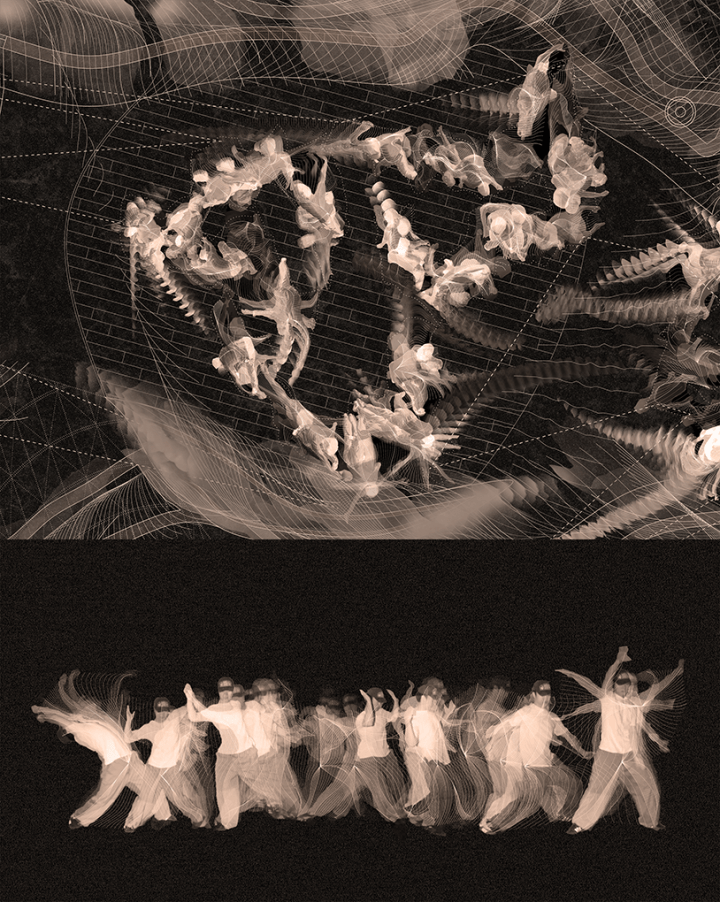
On-stage
For key areas of the choreography further built elements were superimposed upon the conceptual forms. For example, with the stage, a sprung wall and floor is employed due to the unusual shape to the main stage, encouraging dancers’ contact with them.
 X-STUDIO