Motion Framed
This project explores how photography can document and reinterpret movement, aiming to expand how architecture engages the body. It challenges conventional views of disability as a constraint, instead treating it as a design catalyst. My interest stems from personal experience with limited mobility, which highlighted how architecture often overlooks lived experience.
Using strip and panoramic photography, the research studies movement through careful calibration of space, camera, and motion. This process informs design decisions, making imagery both method and measure.
The project evolves through ongoing experimentation between photographing motion and developing architectural plans. Strip photography captures distortions linked to speed and rhythm, while panoramic images provide continuity and spatial context.
The final proposal is a physiotherapy centre designed for users with limited mobility. Rather than prioritizing practicality, the design empowers users through visually rich, navigable spaces that rethink accessibility.
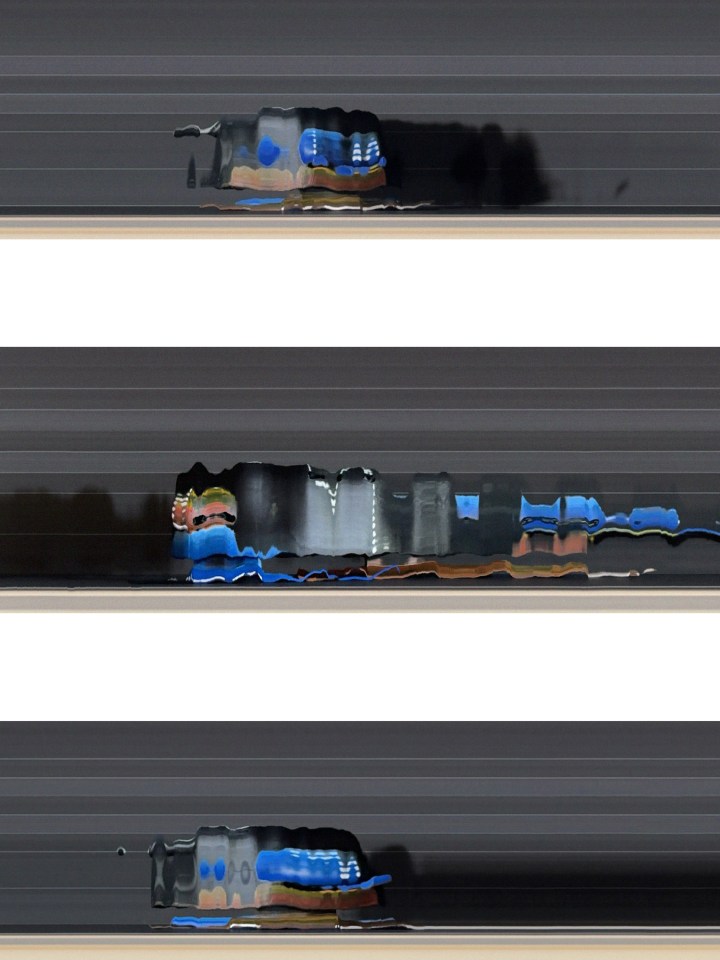
Strip Photography Tests: Movement and Distortion
Motion distortion embeds information into strip photography, created by stitching vertical slices over time. Subject speed alters appearance—fast motion compresses, slow stretches, and rotation or wobble is exaggerated.
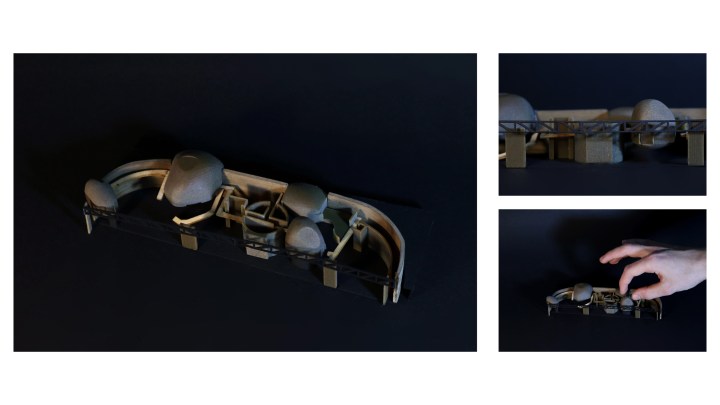
Centre for Movement and Image: Physical Model
The building is wrapped by a curving wall that shields it from nearby roads, while the lower facade opens to the canal. The open-plan ground floor allows free movement and houses camera systems, with suspended vessels containing physiotherapy spaces.
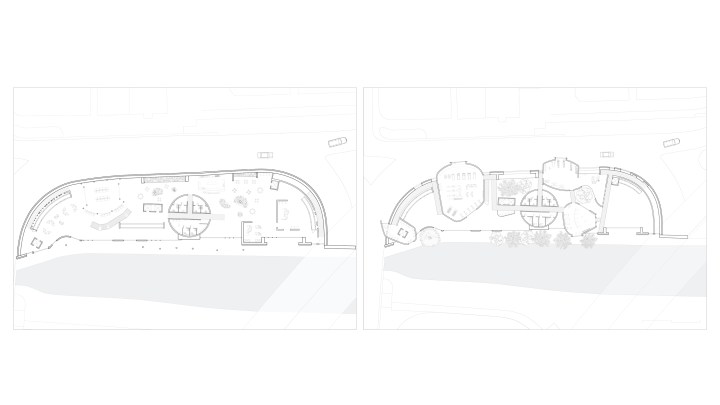
Plans: Ground Floor and Upper Floor 1:200
The physiotherapy centre features an open, accessible ground floor. Treatment occurs in suspended vessels on the second floor, connected by walkways. The design guides patients through a visually rich, unconventional take on accessibility.
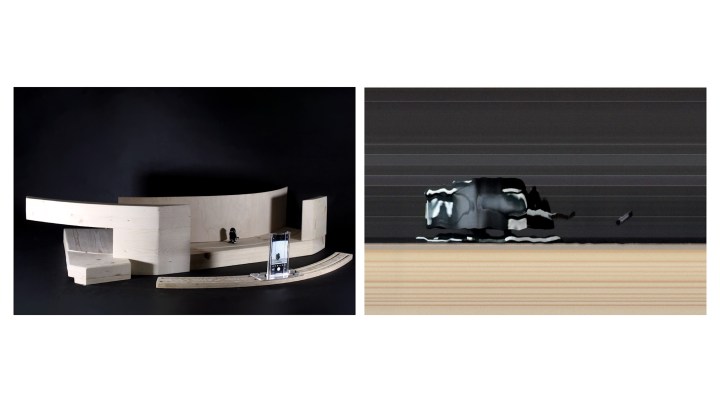
The Model A Working Frame for Photographing,Testing and Spatial Calibration
The model focuses on a specific moment within the building and serves as a stage to experiment with the delicate calibration between architecture and camera. Ultimately, it becomes a key tool that informs the design process.

A Series of Parts
The model was built as modular components due to frequent medical travel and limits on lifting during my own recovery. This approach made it fully portable and allowed work on one piece at a time.
 X-STUDIO