
Resonant Architectures
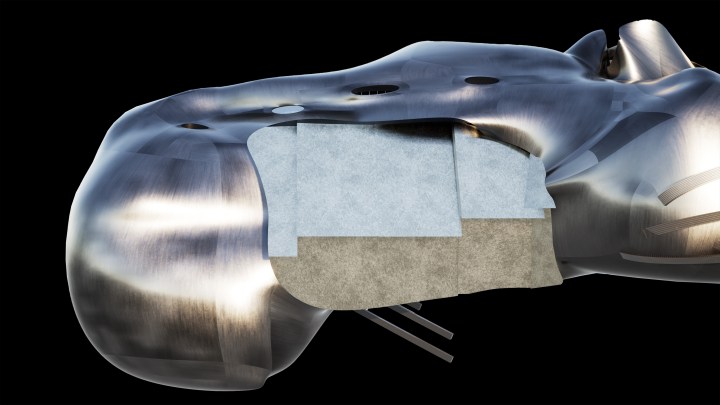
Resonant Architectures reimagines the tourist centre as an instrument of acoustic transmission. Suspended beneath Hungerford Bridge, the building captures and amplifies low-frequency vibrations from the city, particularly those from trains and footsteps, through a series of tuned resonant chambers
Rather than showcasing familiar landmarks, the centre curates hidden, sound-responsive spaces revealed through bodily presence. Each area is materialised to amplify or dampen sound, producing shifting atmospheres and vibratory effects. Movement becomes a method of navigation and listening.
Informed by physical prototypes, speaker tests, and recordings made on site using a LOM Geofon microphone, the design blends sonic research with architectural form. A machined sound test plate, suspended speaker device, and speculative sound mapping all feed into the building’s final spatial logic. This is an architecture that is felt through the body, where resonance becomes a language of place.

Suspended Coil Resonator
An electromechanical speaker prototype that amplifies low-frequency sound through a tensioned metal frame. The coil reacts to input pulses, causing the steel sheet to vibrate – demonstrating how structural form can act as both amplifier and resonator.
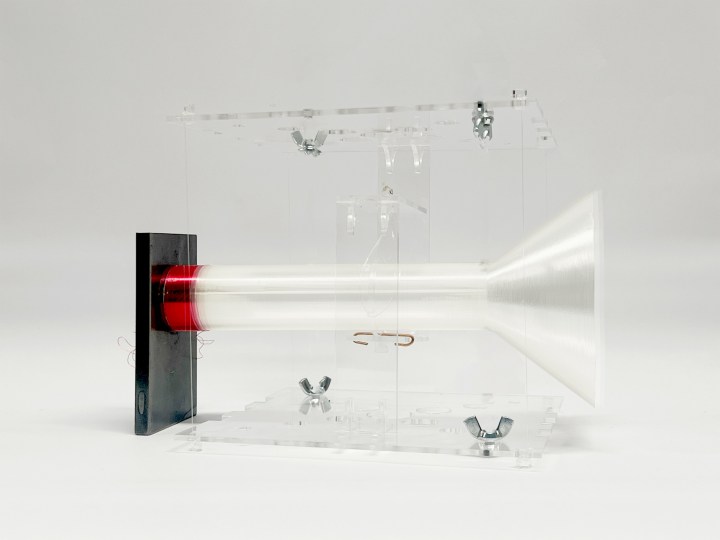
Tensegrity Pulse Speaker
A transparent speaker device suspended in a tensegrity inspired acrylic frame. It converts a user’s pulse into low-frequency vibrations, using internal rhythms to explore resonance as a spatial language and sensory interface.
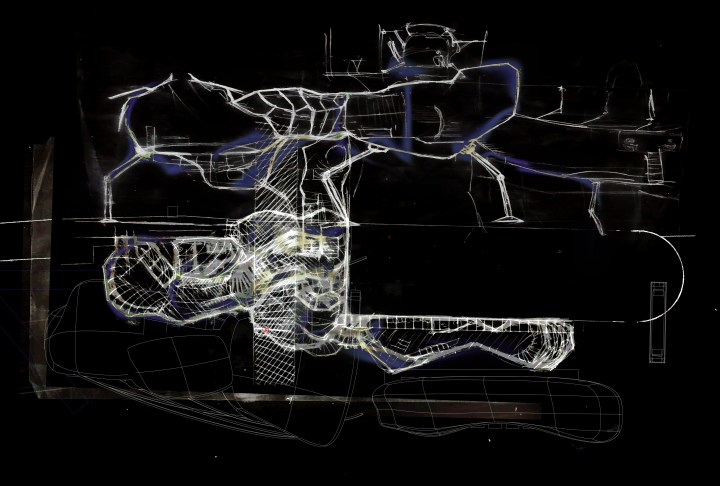
Composite drawing showing sound responsive circulation
A speculative composite drawing that maps areas of resonance within the building. It blends section, plan, and spatial layering to reveal how sound shapes circulation, zoning, and intensity across the proposal.
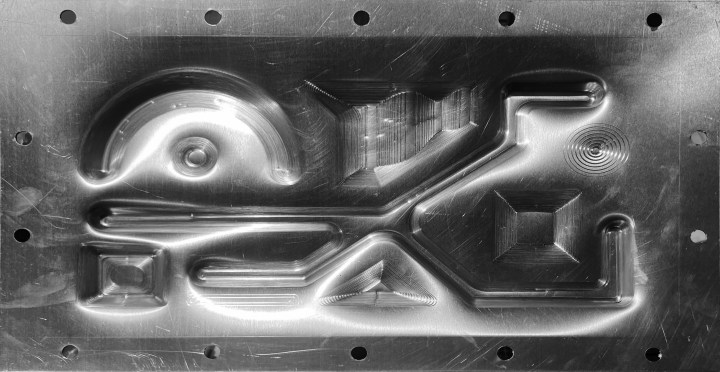
ISF plate testing acoustic behaviour through surface geometry
A machined aluminium test plate used to study how sound interacts with form. Manufacturing ridges, often seen as defects, are used to create ripple effects in vibration – guiding, scattering, or focusing sound through unintended geometries.
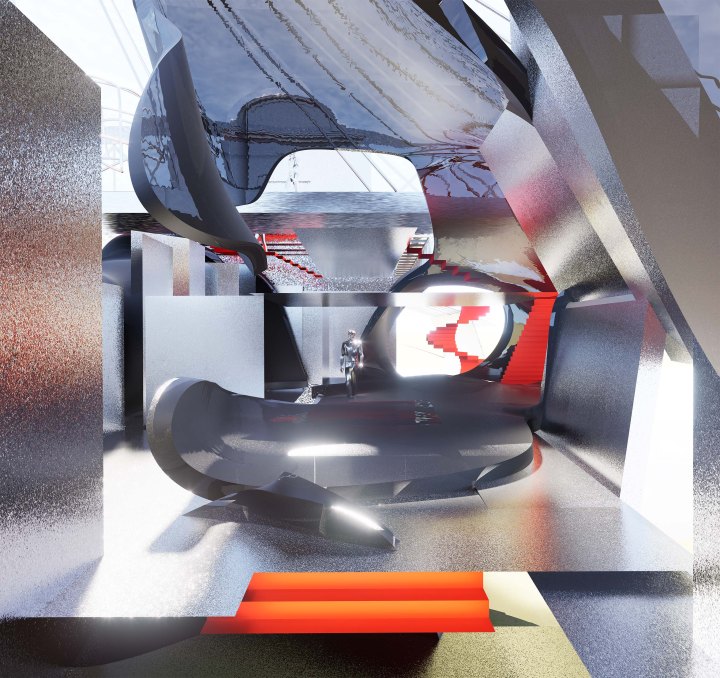
Interior render showing tuned surfaces and layered atmosphere
A visualisation of the building interior. Materials are chosen for their acoustic qualities, with walls and floors designed to resonate or soften sound. The space is tuned for listening through movement.
 X-STUDIO