COLLECTIVE RECIPROCITIES
Collective Reciprocities develops from an exploration into the Chinese Dizi flute, transforming it from a solo-played instrument into a collaborative ensemble requiring collective understanding and cooperation to modulate pitch. Situated in Hastings, the novel three-vessel instrument formed from draped polymer clay and housing pipe configurations also embraces a responsiveness to water. It reimagines the flute as a collective tool, engaging multiple dependencies and enhancing a particularity in form and function through bespoke design that responds to its playing collaborators.
The instrument informs an architecture reimagining a workshop, and rehearsal and performance environment for musicians, curated through a unique crafting approach of molding and draping techniques to consider precision and intentionality in both its design and construction. Rooted in ‘collective reciprocities,’ its architecture explores how components and spaces can work independently yet is crafted with precision and mutual consideration to form a cohesive whole—every workshop, room, and structural element collectively supports and enhances each other, simultaneously having a character of its own.
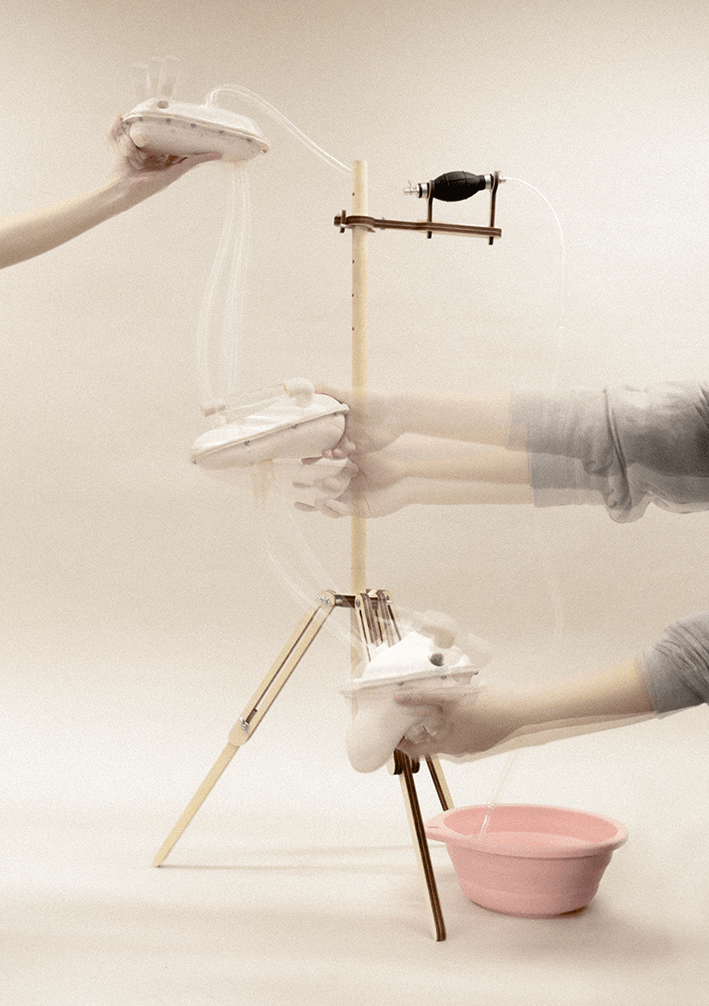
Reimagining the Dizi: The Flute as a Collaborative Tool.
The Dizi is reimagined as a collective instrument with vessels interconnected through tubing. Operating independently or collaboratively with water flow, players influence the pitch of the primary vessel through movement and mutual understanding.
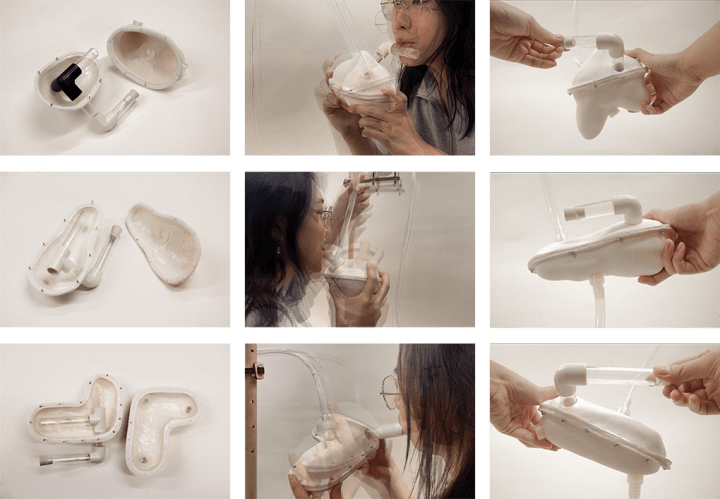
Collaboration in Motion: Vessels, Players, and Water.
Each vessel carries varying pipe configurations, altering the instrument’s length at different orientations. This creates dynamic pitches as water flows and transfers through movement, influenced by the vessel’s tilting and the players’ interactions.
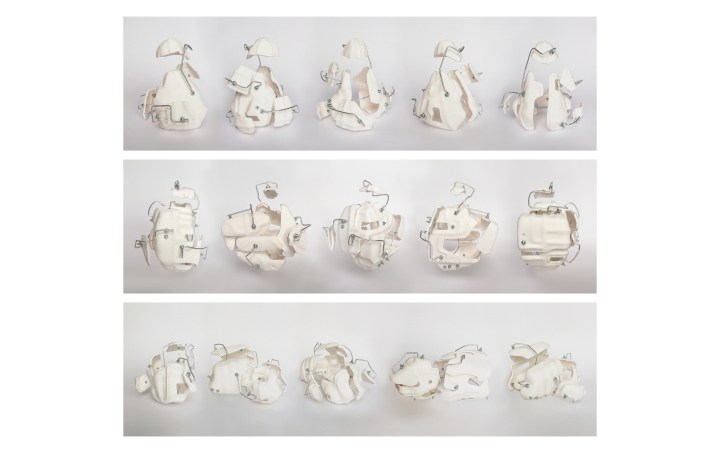
In Mutual Considerations: Craft and Form
Polymer clay forming techniques consider precision and intentionality to model workshop and musical rehearsal environments, inspired by exploded Beauchene models—components are crafted independently yet support one another to form a cohesive whole.
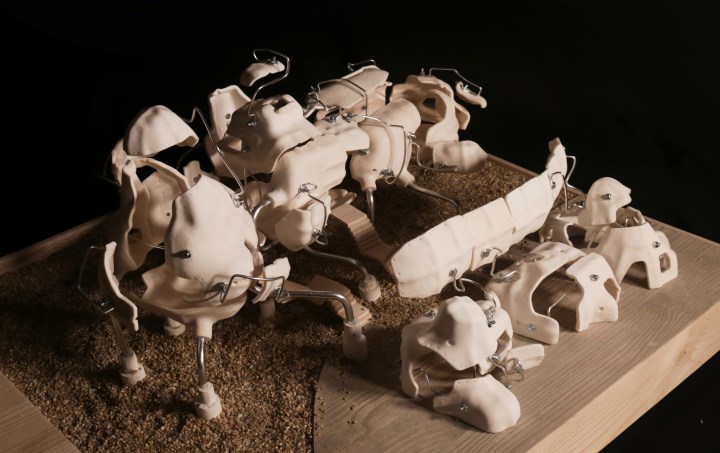
In Collective Dialogue
Elements of the building—windows, connections, and structures—collectively support and enhance one another while having a character of its own. Each piece is bespoke, curated for specificity, and designed to be in dialogue with the others.
Collective Reciprocities in Drawing
The final drawing, designed as foldable pieces with various components, mirrors the building architecture. Components are shown its front and back, interior and exterior, and are movable, requiring them to interact to reveal the structure’s nuances.
 X-STUDIO