
Jigs in Other Beginnings
This research project has been studying how processes of manufacture have a conceptual influence on things that are made. An important part of this inquiry being how the process of manufacture can be contingent, an ongoing part of the conversation between design and making. It is therefore curious as to how the process of manufacturing architecture might be an ongoing practice subject to variations in occupation, desires and needs rather than a fixed ideal.
To develop this thesis, the brief proposes a boat building workshop on Regents Canal, Islington, as the starting point for its investigation. The provision for the production of boats in turn provided an opportunity to fabricate architecture, even after boat building is no longer practiced on the site. To initiate the process early work evolved around working with a generic jig constructed as part of founding research, use of which highlighted the need for a more specific apparatus particular to the type and size of boat, and in turn the architectural spin-off. A liminal architecture that dips its foot into craft, what is known and what might come in the future.
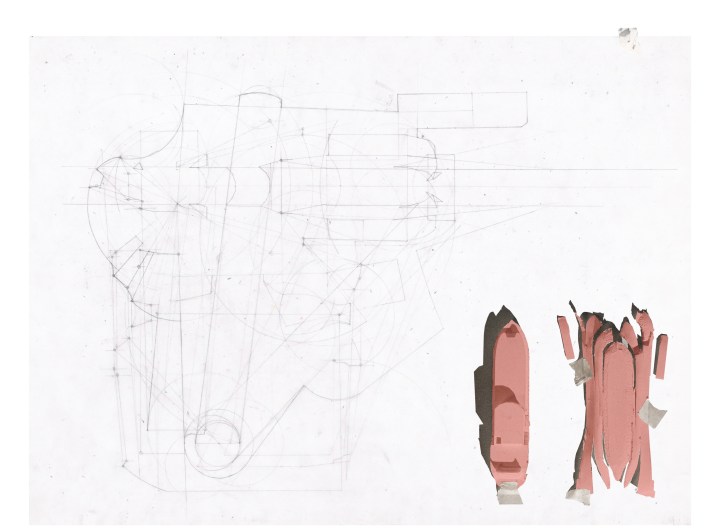
A Boatbuilding Landscape
The project finds its narrative and form through the deconstruction and reorganising of boat hulls. Here, a key drawing in a series that iteratively reconstructs an unfolded river boat, beginning to speculate towards the buildings plan and functions.
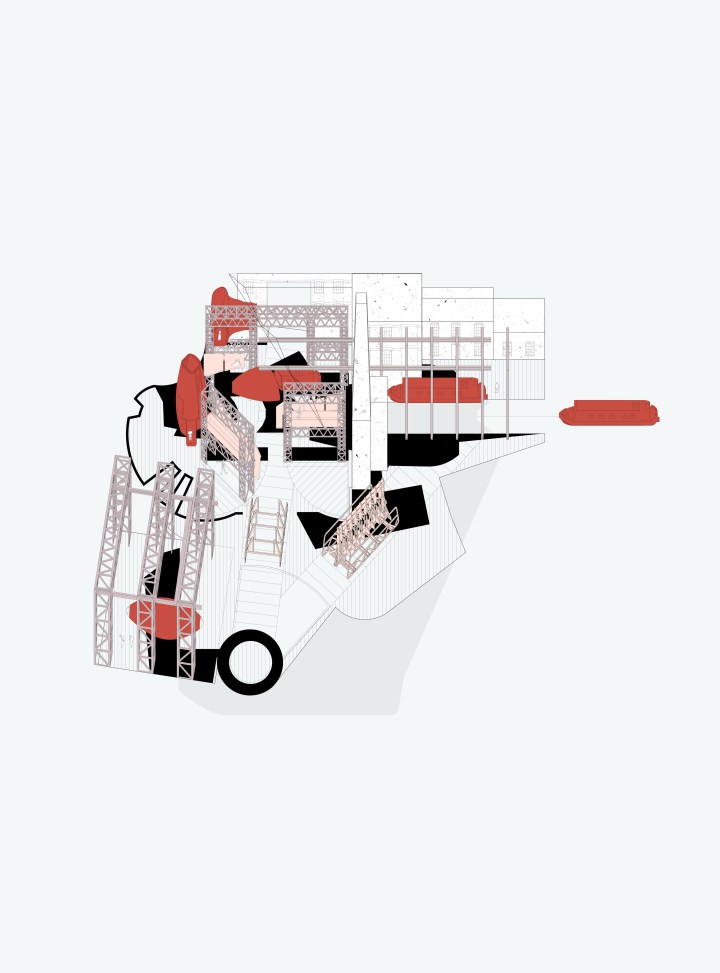
Sequence of Reconstruction
The buildings general infrastructure is laid out in an order akin to the maximum dimensions of watercraft on the canal, but its systems and jigs highlight a manufacture that is more liminal in its nature and allow for a crossover between worlds.
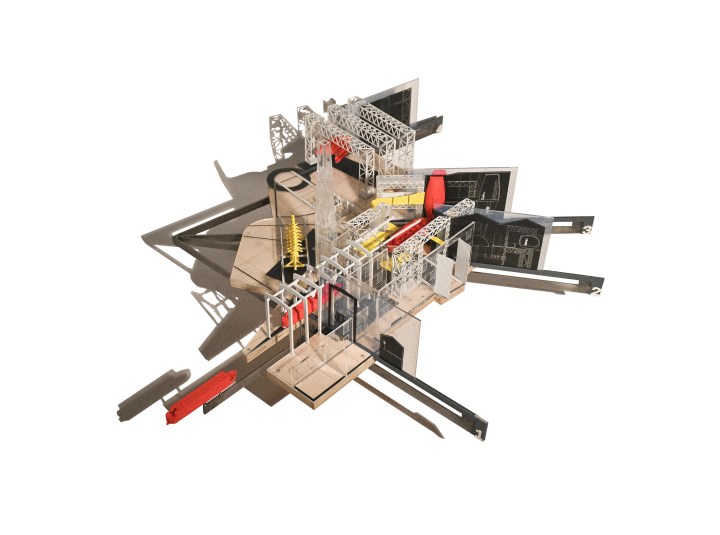
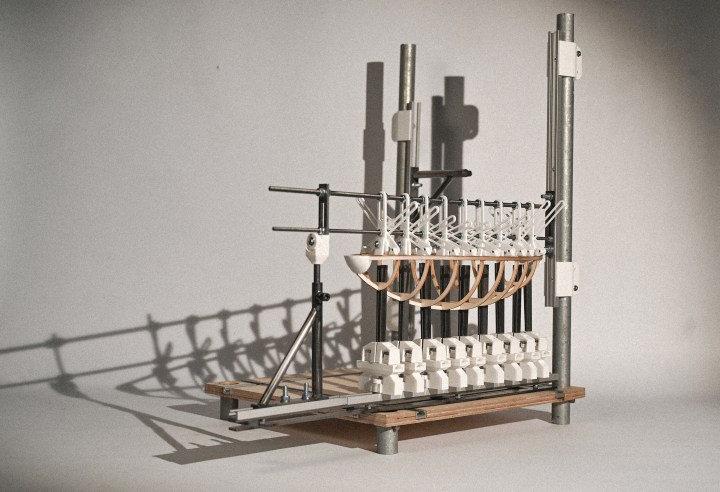
Forming a Narrative from Jigs
Models and material tests are realised in an interplay of scale and purpose that become critical to the project researching intersections of craft, liminality and form.
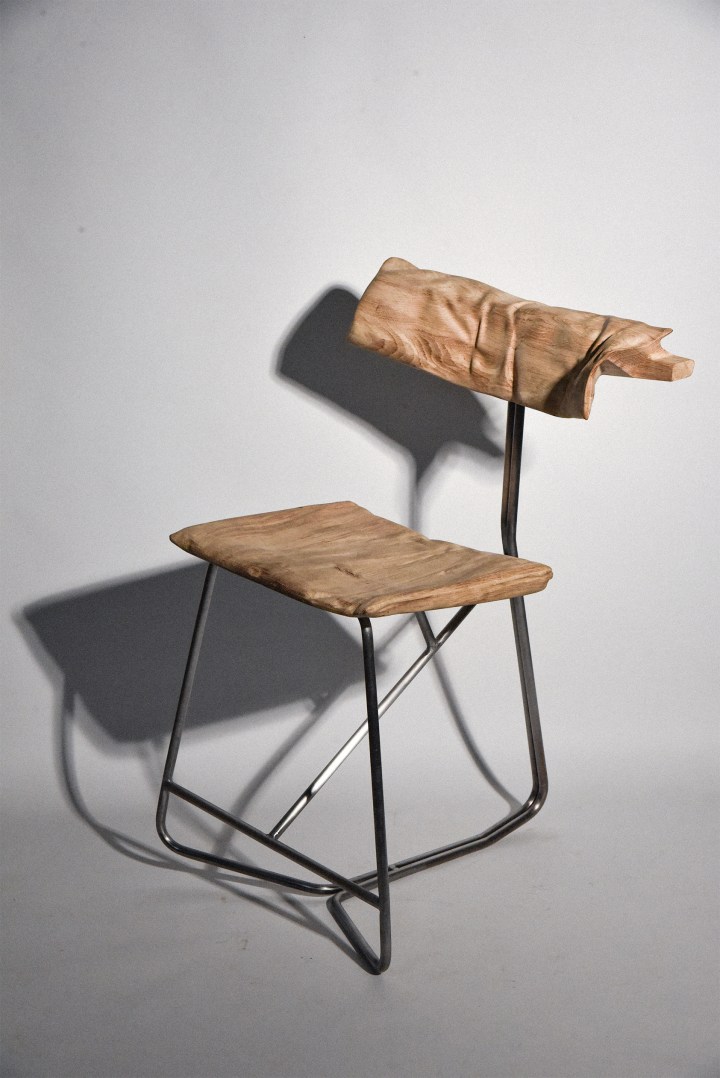
The Comfort Form
A supporting investigation into liminality of comfort aimed to translate a subjective experience into tangible forms. Milled oak cushions and adjustable armature served as both a functional object and conceptual inquiry into one’s perception of this.
Toward a Liminal Architecture of Craft
The site becomes a continuous landscape between timber stock, boats, moulds, jigs and their subsequent spaces, creating a messy hybrid within the logic of its sequence.
 X-STUDIO