Impressions of the City
Interaction between each other is becoming obsolete an idea that we now rely much heavily on our technology. The recent surge in this technological era means less reliance on each other. Not only is interaction with one another decreasing but interaction with architecture and the city around us. We walk down the street with our headphones in listening to music to add more interest into our journey. But what if we didn’t ? What would the feeling be then? How do we go about life more interesting way without it feeling monotonous? This project aims to respond to this through designing a space that encourages human interaction-both with each other and with the surrounding architecture.This project explores these ideas through printmaking, specifically woodblock printmaking as a methodology for design, as a spatial language but also as a communication method.

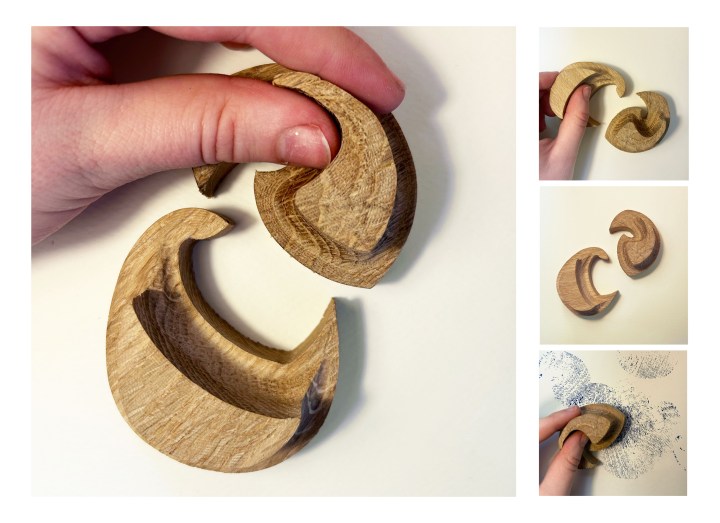
Manufacturing the hand made – Print sequence
This skills project demonstrates use of CAD and CAM can be an extremely useful tool in the process of print making. These types of tools allow for high accuracy. With the use of geometry prints can be carefully designed through the tool paths used.
Print as a Spatial Language
A print block created informed by the span of my own hand, in order to print upon building drawings as a method of spatial language.
Long Section
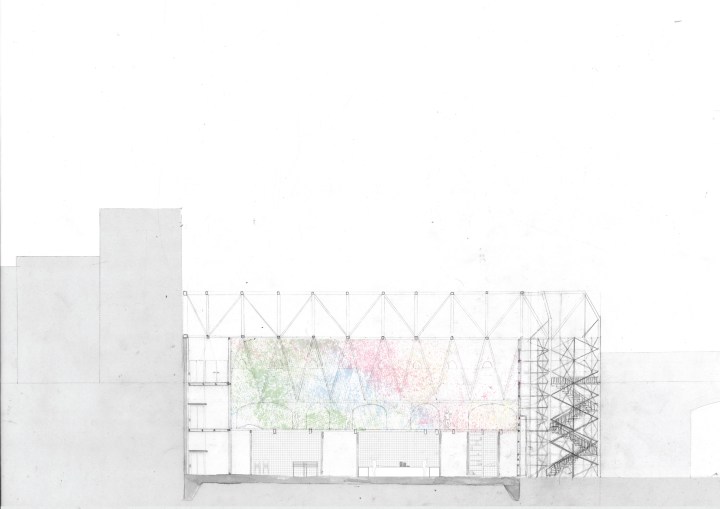
The architectural proposal is a community bar and performance space. The basement holds utilities; The lower ground, houses the main social space; and the ground floor, acts as an entrance and a visual anchor for the street above.
Translating pattern into Spatial Dialogue
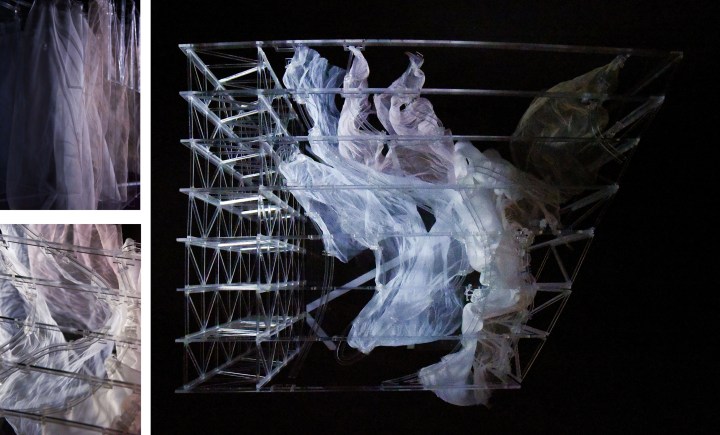
The print informs the curtains. They act as both spatial dividers and mediums of interaction. Lighting tests revealed how fabric opacity changes depending on direction and intensity of illumination, producing moments of concealment and revelation.
1:20 Fragment Model
Light, colour, and material interaction shift across the day. Responding to wind from the passing trains, casting shadows and enhancing the building’s immersive character. The architecture is not static and responds to the immediate environment.
 X-STUDIO