Infra-Sculpting Portland

The research began with a fascination for unearthing events too fast or slow for us to usually notice, using filmic techniques to make connections across speeds of time.
In an abandoned gulley in Tout Quarry, Portland, the project sets up an ecology of dependencies between different speeds of change – building upon an existing sculpting infrastructure. Where sculpting often represents a desire to extend a moment, occupants learn to carve increasingly short durations, as opposed to instants, or still lives. These dependencies are sculpting studios of increasing difficulty – students progress from one studio to the next in a process of becoming ever more temporally acute; discovering the richness beneath the site’s veil of inactivity. Over ‘time’, the sculpting generates a relief map of un-noticed changes across the walls of the gullies; an evolving atlas of infra-events.
To support these durational acuities, the facility is partially constructed from un-noticed dust from the sculpting process. Forming like stalactites, the wind affects the shape of artificially created ‘geological’ shells, which reciprocally affects the wind as it passes through. Spaces inhabit these shells – turbulent wind flows prevents habituation, creating a slower experience of duration; whereas the consistency of laminar flow is utilised for faster durational experiences, and for ventilation.
Sculpting Fast and Slow
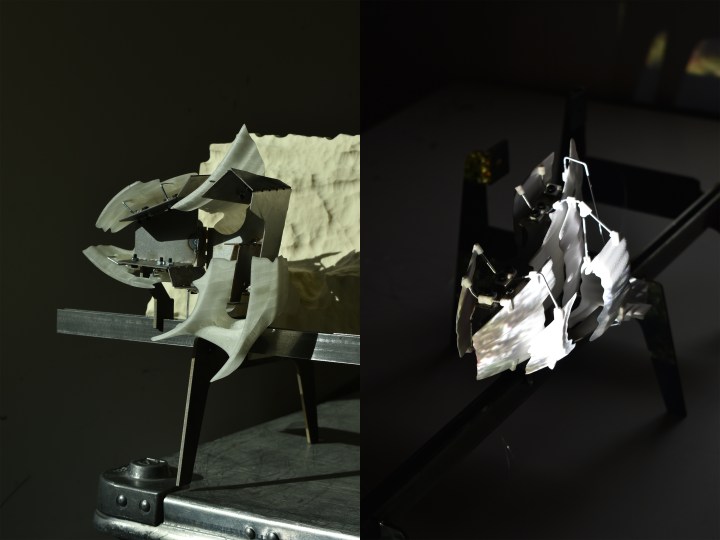
Studios create relationships between sculptors and events unfolding at different speeds. In return for their use as a study, the people and wildlife it observes are provided with a spatial incentive to occupy the gulley.
Atlas of Infra-Events
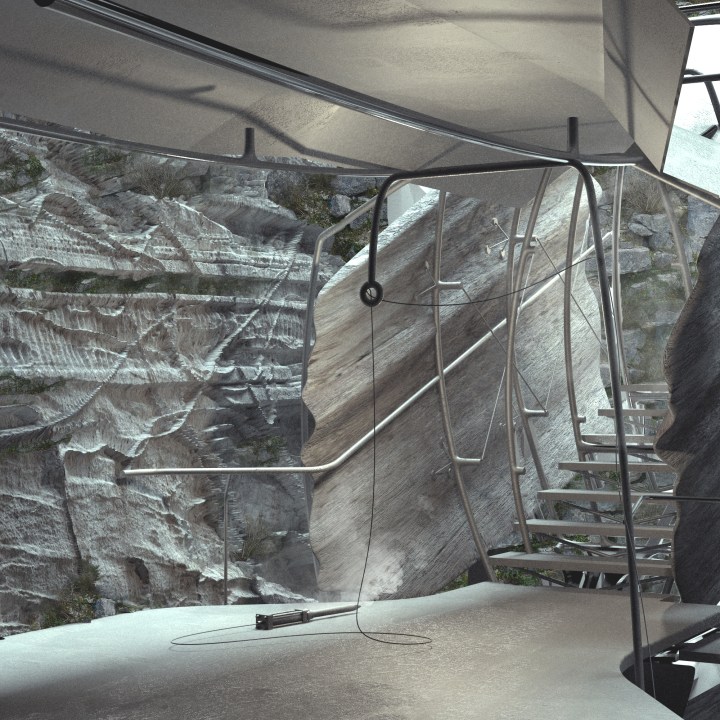
The sculptors carve a relief map of infra-events into the gulley wall. Small, detailed carvings of fast events criss-cross over slow, rough carvings of seasonal changes. The map can be read to trace the changes of unseen phenomena, and where they intersect.
Inhabiting Wind Shells
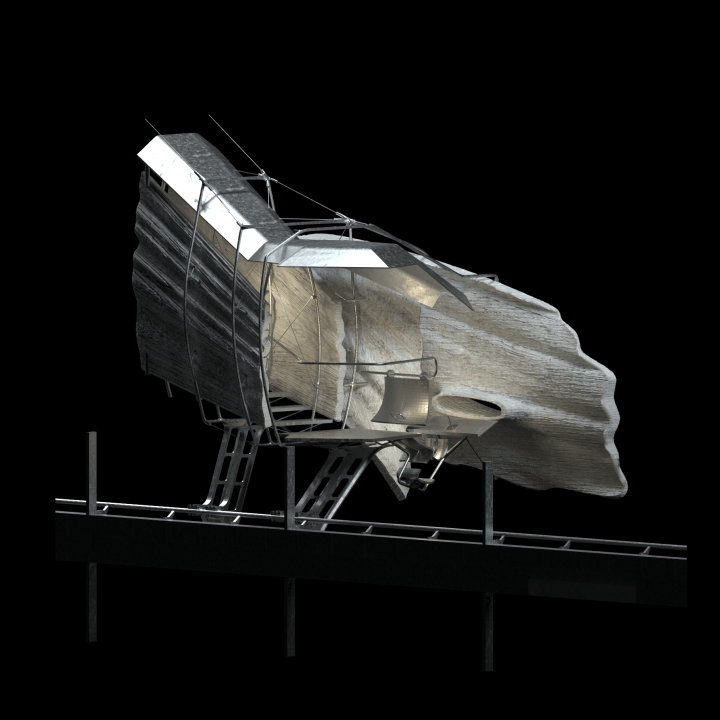
Observational spaces in each studio occupy wind shells, suspended from their central chassis. Turbulent airflow prevents habituation, creating a slower experience of duration; whereas laminar flow is utilised for faster durational experiences, and for ventilation.
Ecology of Inter-Durational Dependencies
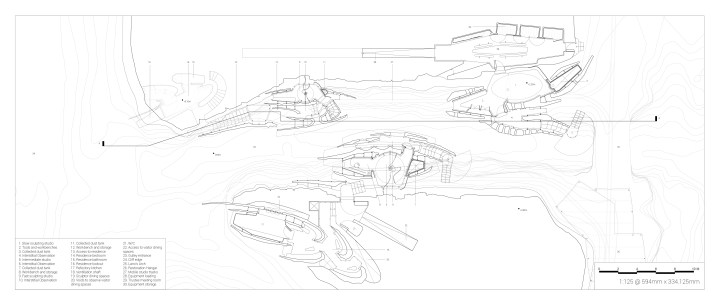
The studio component of each dependency is mobile, moving along a new network of rails that enables them to traverse the abandoned quarry, at their respective speed.
Observing the Gulley
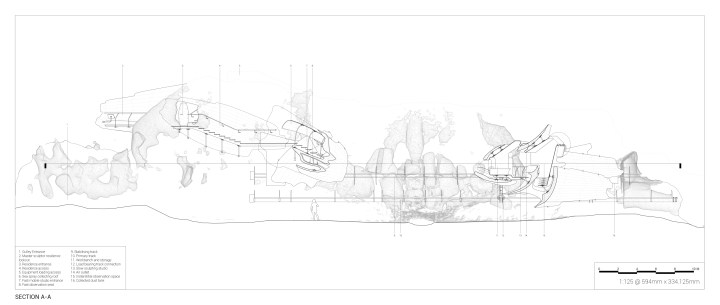
The habituated fastness of locals is observed by the lead sculptor. The studio follows them as they walk through the gulley, to understand their motion. In return, they experience the prickly sensation of being watched – helping create a slower durational experience.
 X-STUDIO